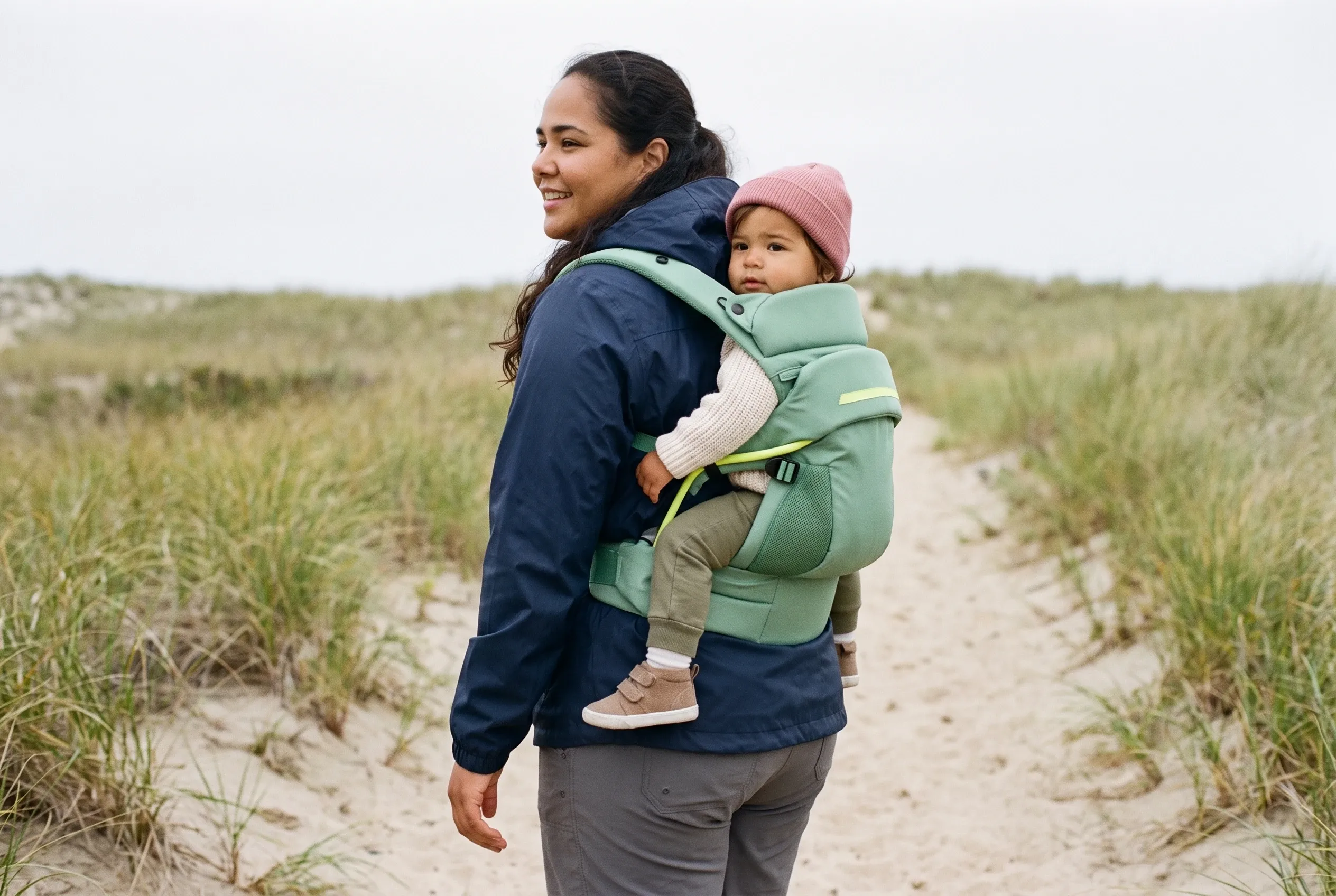
Most carriers let you carry your little one on your front and on your back. There are also special framed back carriers, where your child sits on a kind of seat. Those are mostly made for longer walks.
Your child is ready for your back once they have enough strength in their back to sit independently. Before that, your child isn’t supported well on your back and may slump. Back carry from 9 months, once your child can sit unassisted.
A framed back carrier lets you take your child off your back and set them down on the ground, still sitting in the carrier. There’s often room to bring all kinds of things along: handy on a hiking trip. But these large carriers don’t fit in a bag, so you don’t often see them on the street.
When to switch from front to back
That depends on what feels comfortable to you. As your child gets older (and heavier), carrying them on your front for a long time may become too much. Your child can also get so tall that it’s hard to see over them. Wear the hip belt lower to see over your child’s head.
Stork Carry sits somewhere between a soft carrier and a framed back carrier, with compact frame bars. The Exoframe Technology™ frame is designed to carry your child’s weight on your hips instead of your shoulders.
You can carry on your back for quite a while. It’s also handy for carrying toddlers who can already walk, for short distances.
This guide is general information, not medical advice. Always read and follow the instructions in the manual.